Village of Saint juéry
#Discover
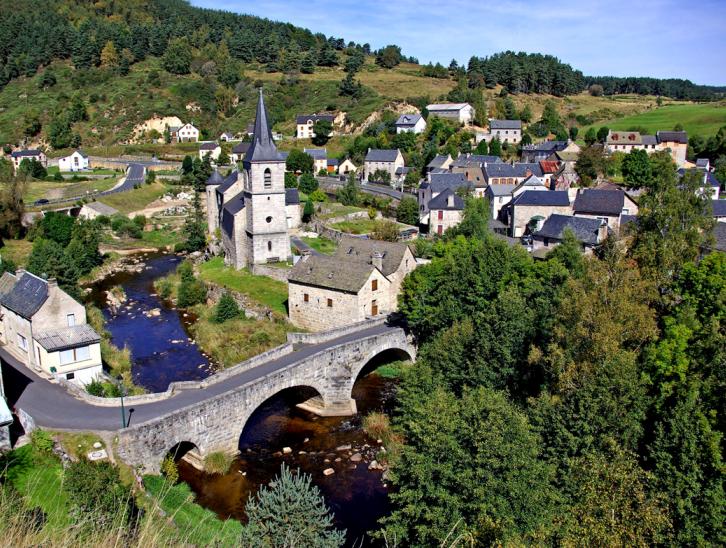
Saint-Juéry is a picturesque village situated on a bend of the Bès River in the Aubrac Highlands. Its name is believed to derive from “Georgius,” a saint whose Greek name means “ploughman,” a reference to the village’s agricultural heritage. The village is built around the Bès River, which here takes on a majestic character as it enters its magnificent gorges, adding to the beauty and authenticity of the landscape.
A bit of history
Saint-Juéry, situated on a bend of the Bès River, took its name from “Georgius,” meaning “ploughman.” The village was once home to a castle belonging to the Fontanges family, to whom the father of Marie-Angélique, mistress of Louis XIV, also belonged.
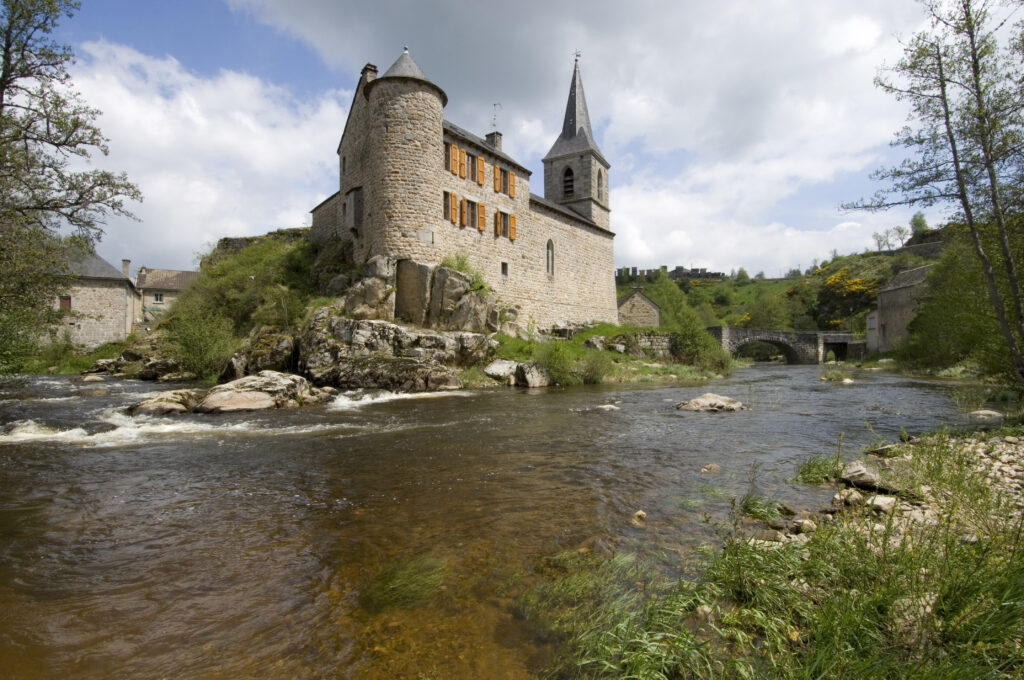
The church and the rectory were built on the ruins of the castle. In 1944, the Germans destroyed them before leaving. After the war, the church and the rectory were rebuilt, with their bell tower and the rectory turret restored.
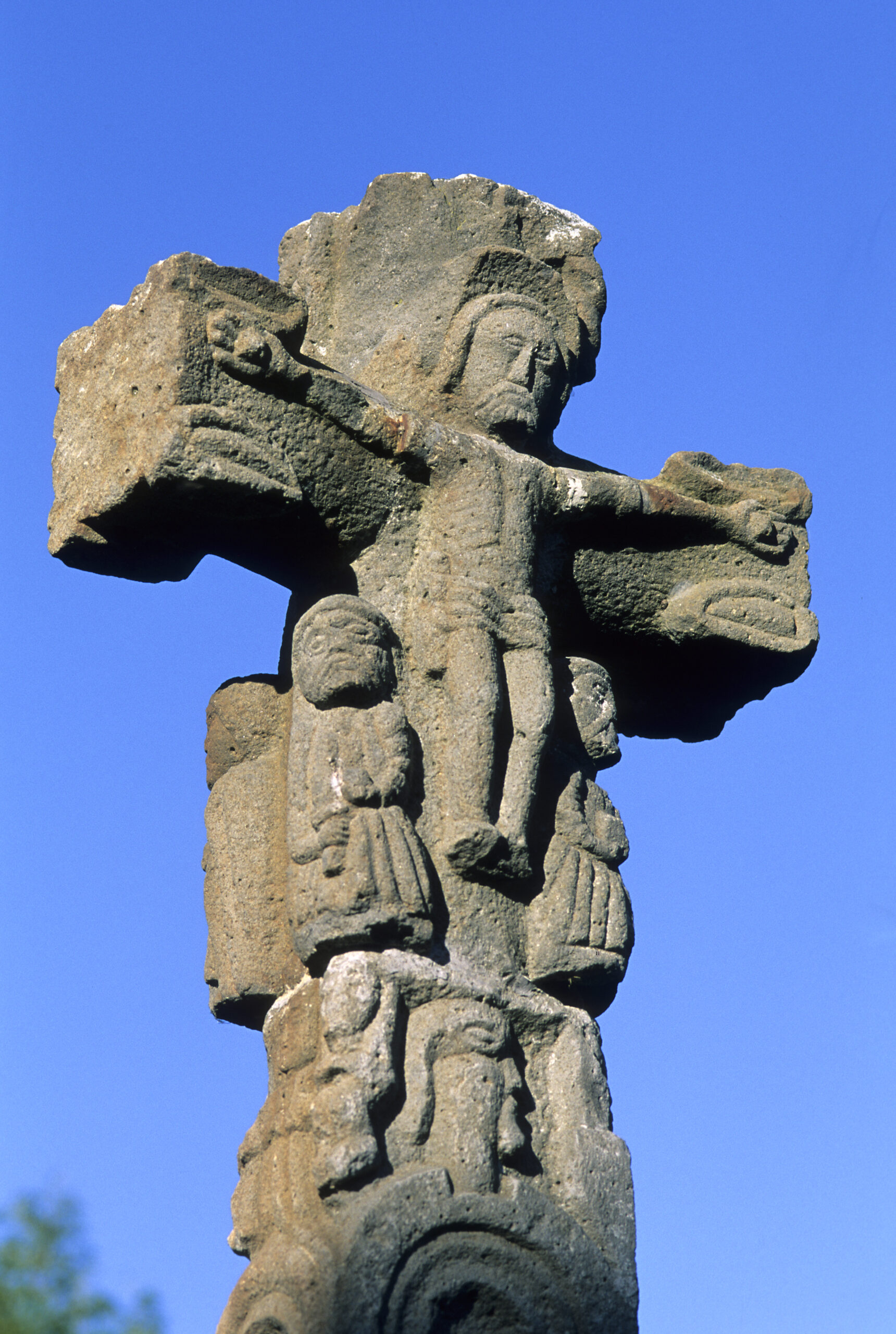
The basalt cross, dating from the 11th or 12th century, survived several trials. It was thrown into the Bès in 1793 and again in 1944, but was finally returned to its place near the old bridge. It depicts Christ on the cross, the Virgin Mary, and some even see in it a pilgrim on the Way of St. James.
exploring the village
The Church of Saint-Juéry: Carefully rebuilt, it features a turret on the presbytery and a charming spire. Furthermore, the nave, shaped like a ship’s hull, is paneled, giving it a distinctive character.
The Bridge Cross: Dating from the 12th century, it is the oldest in Lozère. Carved from basalt, it depicts the four Evangelists, Saint Peter, Saint James, and Saint Maurice, the patron saint of the parish. After being thrown into the Bès River in 1793, it was recovered in 1923 and again in 1944. It thus remains a precious witness to local history.
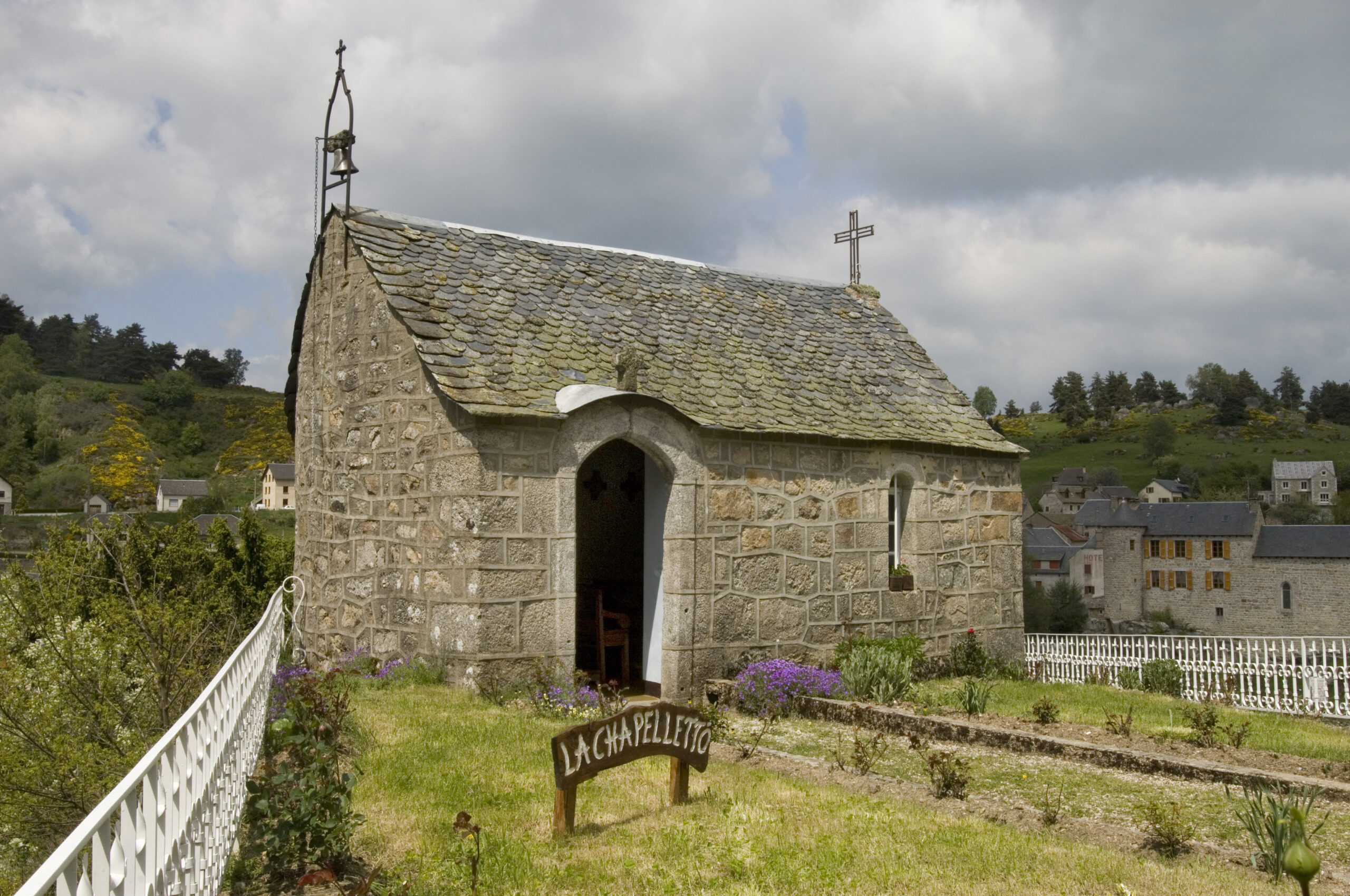
The Chapel: According to legend, a bull, while scratching the earth, unearthed a statue of the Virgin Mary. Convinced of the miracle, the villagers decided to build a chapel on that spot. Although the building was destroyed in 1944, the statue of the Sacred Heart miraculously survived.The Bréchet and Combayre mills: These mills are reminders of the village’s agricultural past. While the centrally located Bréchet mill operated until the 1950s, the ruined Combayre mill now stands on the “Around Saint-Juéry” hiking trail.
The bread oven and the granite bridge: Finally, the village preserves these vestiges of its rich heritage, which add to the charm of Saint-Juéry.
the Spanish trail
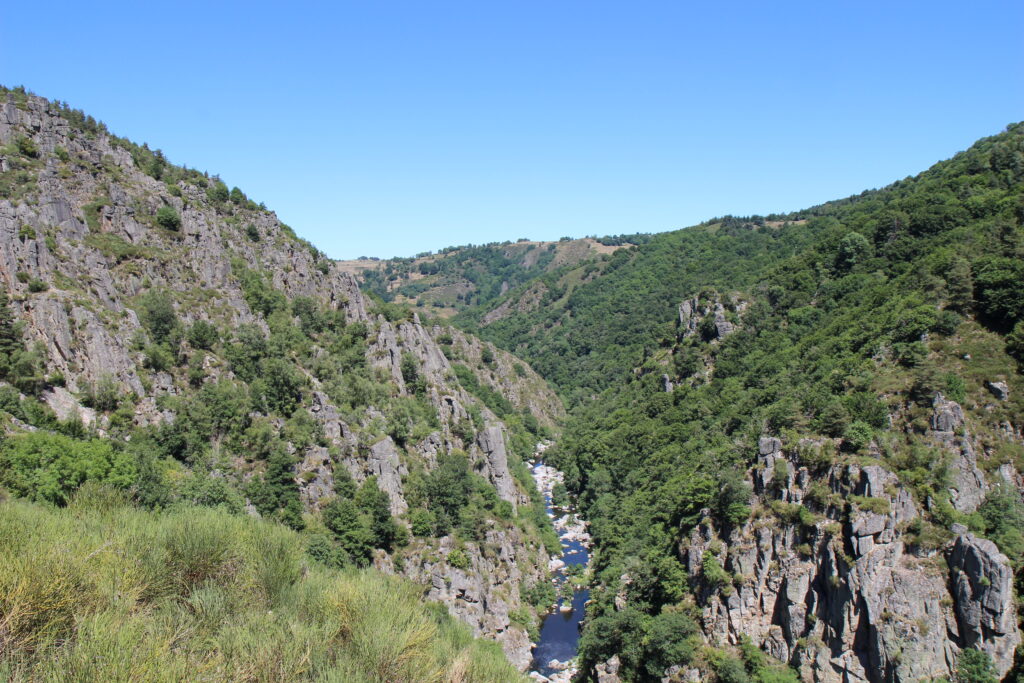
The Sentier des Espagnols (Spanish Trail) runs alongside the Gorges du Bès, a wild place where the river, which rises on the Aubrac plateau, flows between the Lozère and Cantal departments. This valley has been the scene of historical and legendary events.
In the 20th century, during the First World War, Spanish prisoners dug the underground water pipeline connecting the Valiette dam to the Vergne hydroelectric power station. This path is now known as the Sentier des Espagnols.
on foot from Saint-Juéry
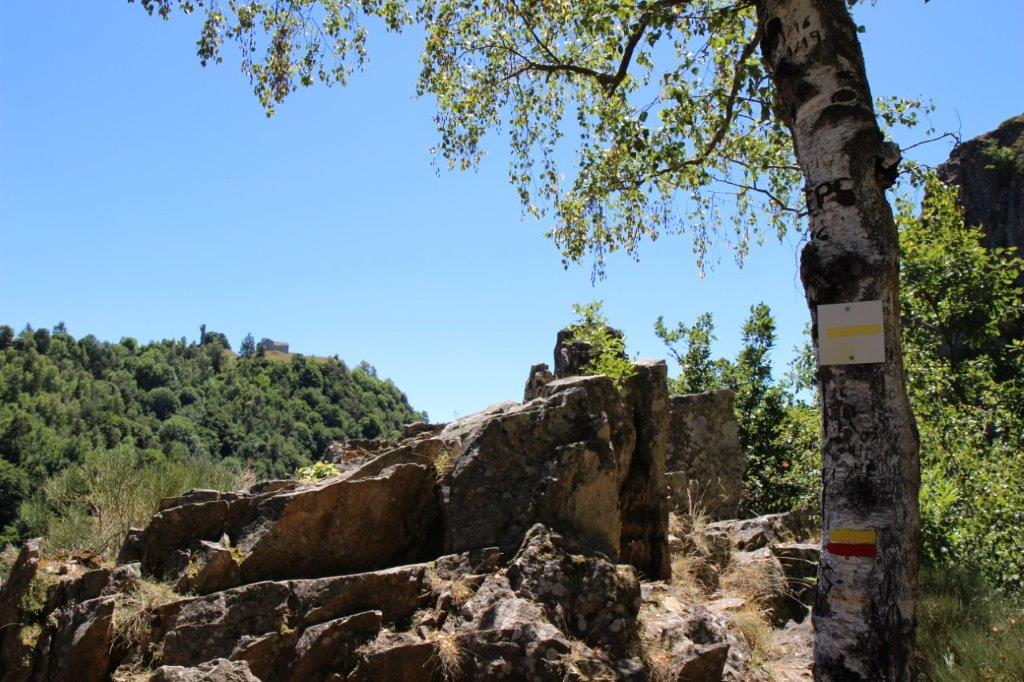
Looking to get some fresh air? Starting from Saint-Juéry, two hiking trails will take you to discover the landscapes, forests, and viewpoints surrounding the town.
Download the detailed hiking guides for each route for free: distance, duration, difficulty level, trail markings… everything you need to plan your outing with complete peace of mind.