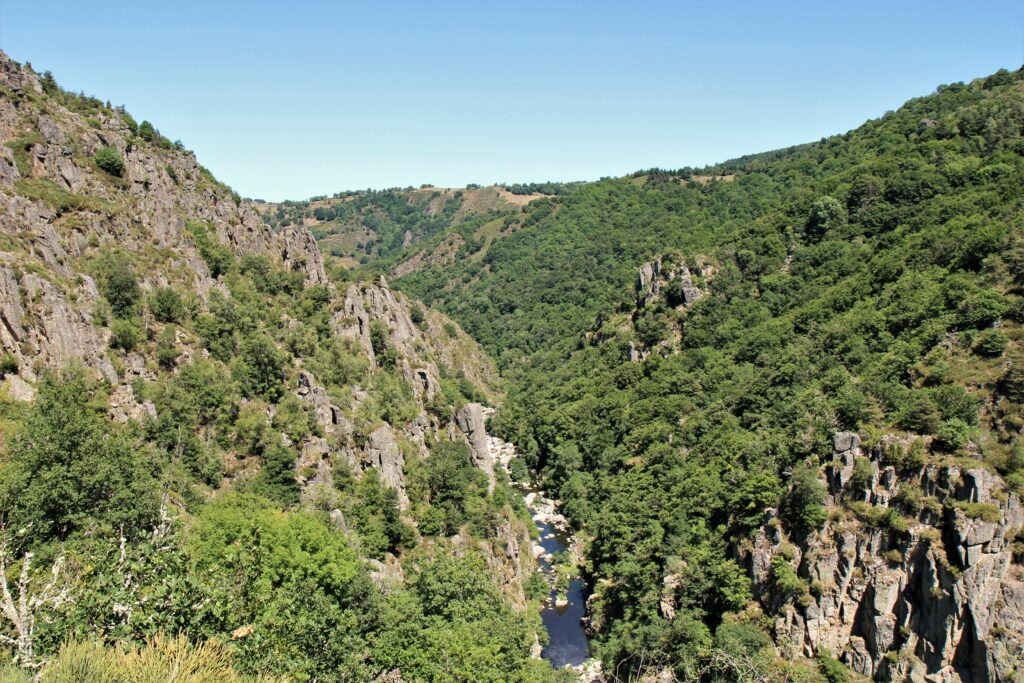
The Aubrac is a vast volcanic and granite plateau straddling the Lozère, Cantal, and Aveyron departments. Its exceptional natural heritage is well worth discovering. It comprises high-altitude meadows, wild heaths, and soils scattered with granite boulders. This ancient massif was formed 6 to 9 million years ago, offering a pristine natural environment where flora and fauna coexist harmoniously. The panoramas are breathtaking. Consequently, the Aubrac is an ideal destination for nature and geology enthusiasts. A visit allows you to admire wild landscapes, observe local species, and fully appreciate the tranquility and beauty of this unique region.
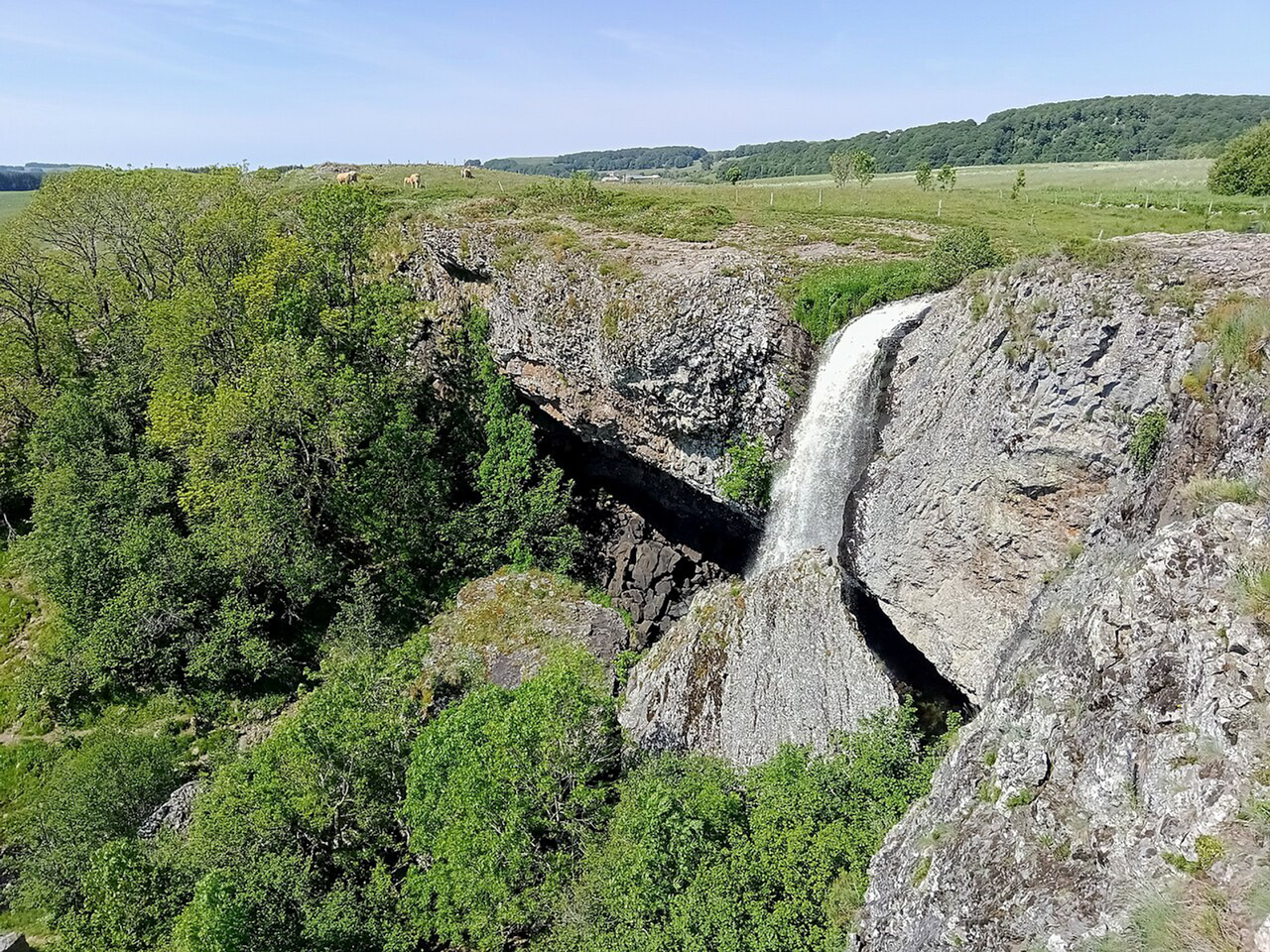
The Déroc Waterfall is one of the most spectacular natural sites in the Aubrac region. At 33 meters high, it overlooks the Gambaïse Valley. The waters of Lake Salhiens and a tributary of the Bès River plunge over a basalt cliff.
Beneath the waterfall, a cave with basalt columns reveals unique geometric formations. The waterfall is also easily accessible. You can follow the marked trail from Nasbinals, the PR “Du Déroc à la Peyrade” (From Déroc to Peyrade), or simply park in the roadside parking area. Thus, the Déroc Waterfall is one of the most beautiful waterfalls in the Aubrac and perfectly illustrates the region’s natural heritage.
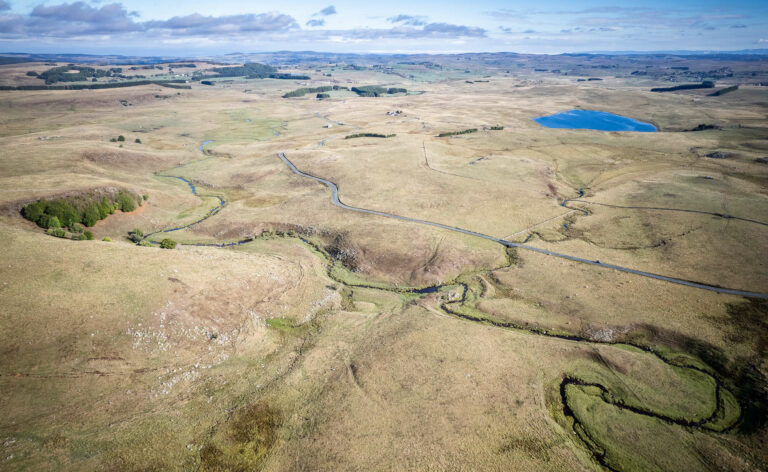
The Aubrac Lakes Route connects Nasbinals to the Booz roundabout. It is one of the most beautiful scenic routes in Lozère.
For approximately 35 km, the road winds through diverse landscapes. Along the way, you’ll see the Déroc Waterfall, four glacial lakes, and the Bonnecombe pond. The route also offers a glimpse into traditional Aubrac life. For example, you might meet Aimé the buronnier (a traditional cheesemaker) and his Aubrac cow at the Booz roundabout.
A stop at a buron (a traditional mountain hut) also provides the opportunity to taste aligot, a local specialty. Thus, the Lakes Route combines landscapes, natural heritage, and culinary traditions for a complete experience of the Lozère Aubrac region.
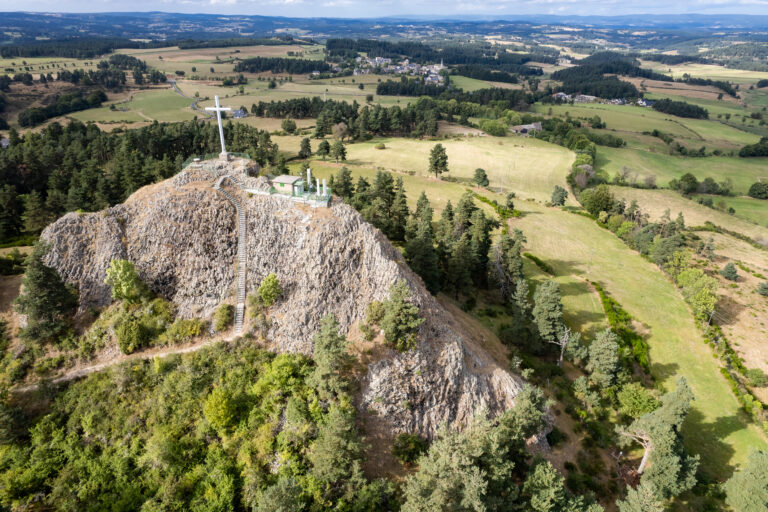
The Rocher du Cheylaret is a table-shaped basalt peak, rising to 1,128 meters. It emerges from the granite bedrock of the Aubrac plateau.
This site was formed approximately 6 million years ago by the erosion of the surrounding rocks. On its southern slope, an old quarry reveals magnificent basalt columns. At the summit, a panoramic viewpoint indicator offers a 360° view. Furthermore, in 2005, a statue of the Virgin Mary was erected, facing the Aubrac Mountains.
Around the Rocher du Cheylaret, other volcanic peaks such as Mont Gourgon, Puech de Montaigut, and Puy de Montivernoux complete the landscape. Thus, this site perfectly illustrates the natural heritage of the Aubrac region.
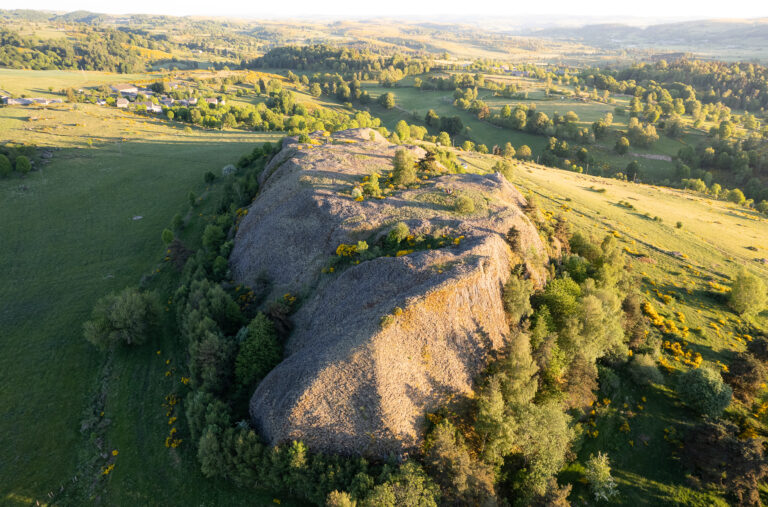
The Roc de Peyre towers over the Terre de Peyre at an altitude of 1,180 meters. From its summit, the view stretches for 20 km in every direction.
Some call it the “Gévaudan of Gévaudan,” due to its historical significance. This rocky outcrop was the foundation of the Astorg de Peyre castle, the seat of a powerful barony. Today, it combines natural and historical heritage.
A panoramic viewpoint allows visitors to admire the volcanic landscapes and surrounding valleys. Thus, the Roc de Peyre is an essential site for discovering the Aubrac region of Lozère and its natural heritage.
The Bès River has carved spectacular gorges through the granite bedrock of the Aubrac plateau. Beginning in Saint-Juéry, they stretch for about ten kilometers.
They then flow past the Vergne hydroelectric power station and the Laval reservoir before reaching Lake Garabit and the Cirque de Mallet. The Bès Gorges are home to a diverse range of wildlife.
Several activities are available to explore this area: Visit Arzenc-d’Apcher, which offers views of the granite columns. Hike the 21 km Sentier des Espagnols (Spanish Trail), or its 6.5 km variant on the Cantal side. Go rock climbing, with numerous routes suitable for all levels.