The Beast of Gévaudan
#HistoryAubrac
- Published the 01/16/2026
- Temps de lecture : 3min
The Beast of Gevaudan
History and mystery in Lozère
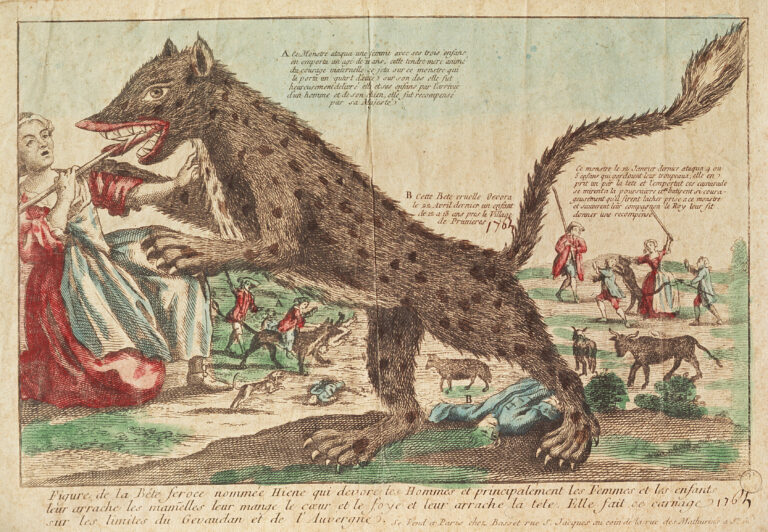
Between 1764 and 1767, the Gévaudan region, now the Aubrac plateau in Lozère, was the scene of events that terrified its inhabitants: the attacks of the infamous “Beast of Gévaudan.” This mysterious and dramatic period left its mark on local history, leaving behind stories, legends, and testimonies that continue to attract the attention of history enthusiasts and curious visitors.
A historical scourge
Between June 30, 1764, and June 19, 1767, numerous attacks, often fatal, were recorded in northern Gévaudan (present-day Lozère), with a few incidents reported in southern Auvergne and northern Vivarais and Rouergue. According to various sources, the number of victims ranges from 88 to 124.
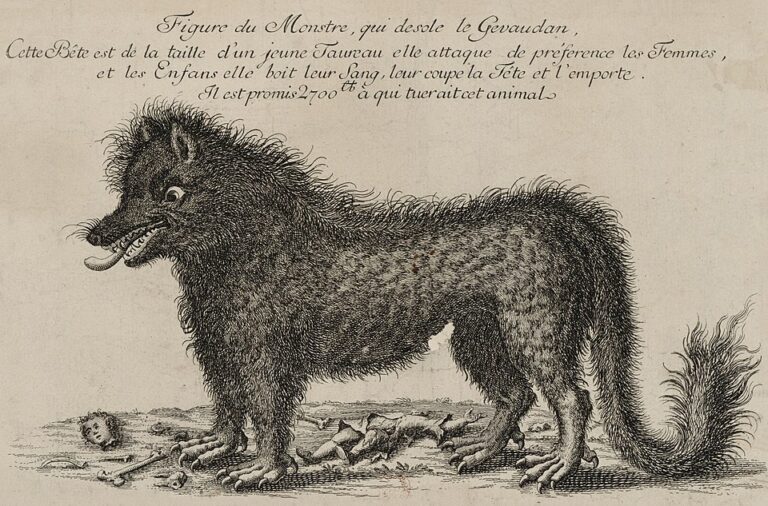
The “Beast of Gévaudan” quickly became more than just a local news story. Royal authorities mobilized troops to hunt it down, while the press of the time seized upon the story, publishing numerous articles and fueling speculation about the animal’s nature and motives. Some spoke of a gigantic wolf, others of an exotic animal, or even a werewolf. Theories ranged from divine punishment to the idea of an animal trained to kill.
The hunt and the end of the mystery
Two animals were finally killed between 1764 and 1767.
The first, a large wolf, was killed in September 1765 by François Antoine, the king’s arquebusier, on the grounds of the Royal Abbey of Chazes.
The second animal, killed by Jean Chastel on June 19, 1767, at La Besseyre-Saint-Mary, is traditionally considered the true Beast of Gévaudan. After this event, no further fatal attacks were recorded.
The Beast of Gevaudan in our territory
The Aubrac region of Lozère was directly affected by these attacks. On December 20, 1764, a 12-year-old girl was tragically devoured by the Beast in the hamlet of Le Puech, in the parish of Fau-de-Peyre. A few days earlier, on December 18, a farmhand had managed to wound the animal three times with an axe while working in a field. These events testify to the dramatic impact of this period on our region.
The accounts and archives from this era, notably the book *La Bête du Gévaudan: 1764-1767* by Jean-Marc Moriceau (Larousse, 2008), allow us to relive this unique chapter in local history.